
You may have heard the term “digital ecosystem.” It alludes to the entire group of IT hardware and services that make businesses tick.
But what does it mean for your business?
Natural ecosystems work in harmony among a diverse set of plants, animals, minerals and climate. A digital ecosystem is not much different, it just has a different set of digital traits. Interoperability (like symbiosis) is essential to its functionality.
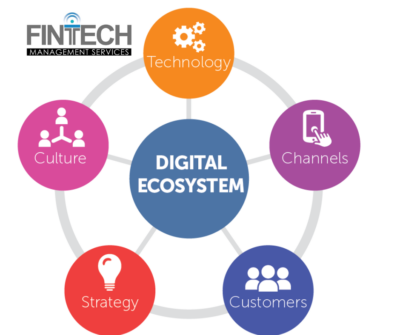
What Makes Up a Digital Ecosystem?
At its most basic, a digital ecosystem is “a group of interconnected information technology resources that can function as a unit.” In this case, it comprises a diverse set of technologies – including devices, data, applications and service providers – that interact with one another to optimize data and workflows.
This interconnectivity enables businesses to leverage new and existing technologies to add value for their customers by providing them with a unified system that fulfills customer needs. Each participant in an ecosystem plays a unique role that supports and complements other participants within the ecosystem. Successful digital ecosystems are win-win for ecosystem participants, which can see increased revenue streams, and consumers, who enjoy better user experiences.
Today, there are many types of digital ecosystems, with many nuances. Some businesses offer in-house ecosystems which host a suite of interconnected products that address customer needs.
Other ecosystems have multi-company partnerships, with each member contributing to the available services. Different markets and sectors rely on these ecosystems to create greater efficiencies, make more informed decisions and expand market reach.
How are Digital Ecosystems Used?
Digital transformation has revolutionized the workplace and accelerated innovation for many companies. Today, they are sitting on highly valuable data and digital assets that can be shared with others to fast-track monetization. A wide range of participants in a digital ecosystem means there are more offerings and more to gain through collaboration.
We see digital ecosystems at work every day, and across many industries through virtual assistants, online banking, healthcare and even the way we do our shopping. Each of these industries leverage expertise from ecosystem participants – whether it is for providing cloud services, secure login, online payments, among others – to tackle challenges that would have proved difficult on their own.
Businesses who participate in digital ecosystems and see collaboration as potential revenue sources are leading edge. The key is building and maintaining relationships within the digital ecosystem, going beyond status quo.
What are the Benefits of Digital Ecosystems?
Leading digital ecosystems have about 40 partners. The ecosystems are ranked on three success metrics (financials, innovation, and total users and growth) and are given a total ranking of leading, middle, or lagging relative to peers.
New and evolving technologies mean businesses now must keep a faster pace in order to survive in this data-heavy world. Success relies on an effective digital ecosystem strategy to enter new markets, build connections, test new business strategies and, ultimately, drive digital transformation. Digital ecosystems allow businesses to:
- Adapt to market changes: Build a robust set of partnerships to pivot more quickly to changes in market demand or as technology evolves.
- Create new revenue streams: Take advantage of integration with other ecosystem partners to offer new solutions that increase your business value.
- Shorten time to market: Leverage ecosystem partners who already have infrastructure in place to help you build products or services in less time than developing on your own.
- Optimize costs: Improve business efficiencies and processes as part of a healthy, well integrated ecosystem and see your operational costs decline.
